
THE TOPIC COLLECTION
Generative AI & Agents
Selected analysis and explanations from the wider Industry AI Decision collection.
CONTINUE EXPLORING
Read into the topic.
Follow the collection, then use a structured reading path to connect the ideas.
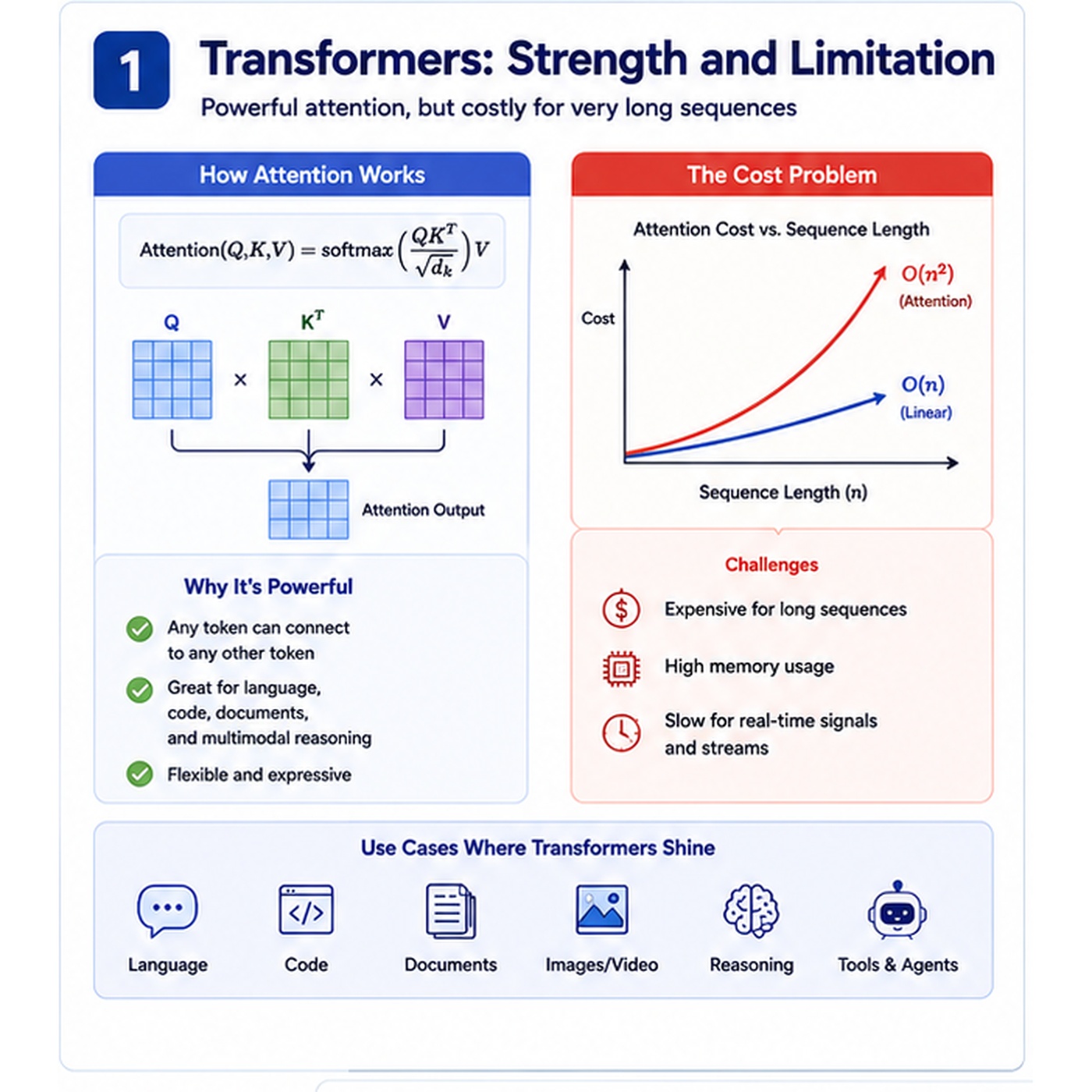
From Transformers to Hybrid Intelligence: Mamba, SSMs, and Next-Generation AI Architectures
Explore Mamba, state space models, and hybrid AI architectures that combine sequence processing, Transformers, RAG, and human review for manufacturing workflows.
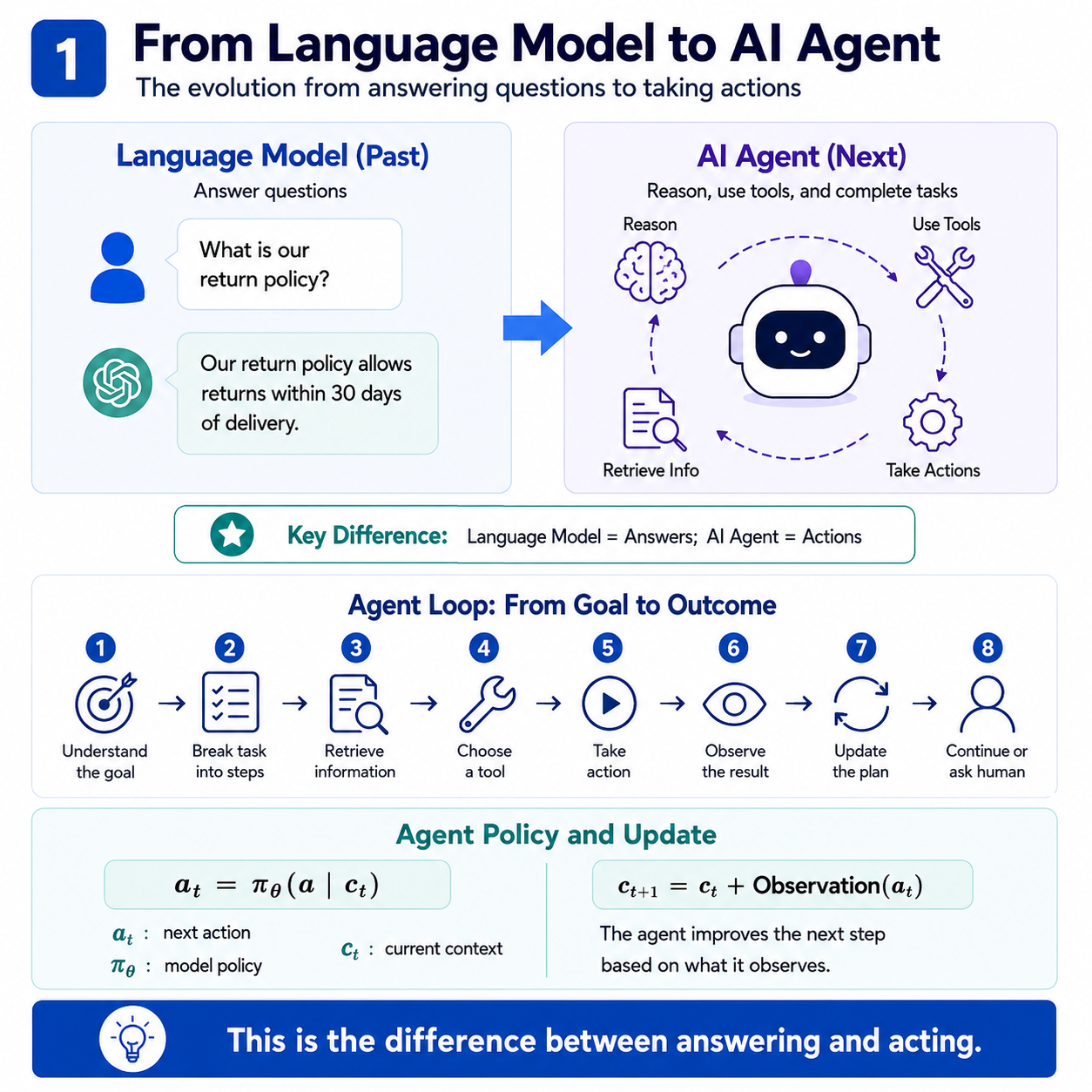
From Answers to Actions: Transformers as AI Agents
Learn how Transformer-based AI agents combine goals, tools, retrieved knowledge, observations, and human approval to support practical enterprise workflows.

From Memory to Knowledge: Long Context, RAG, and Enterprise Transformers
Compare long context and RAG for enterprise AI. See how document retrieval and larger inputs can support manufacturing knowledge, evidence review, and…
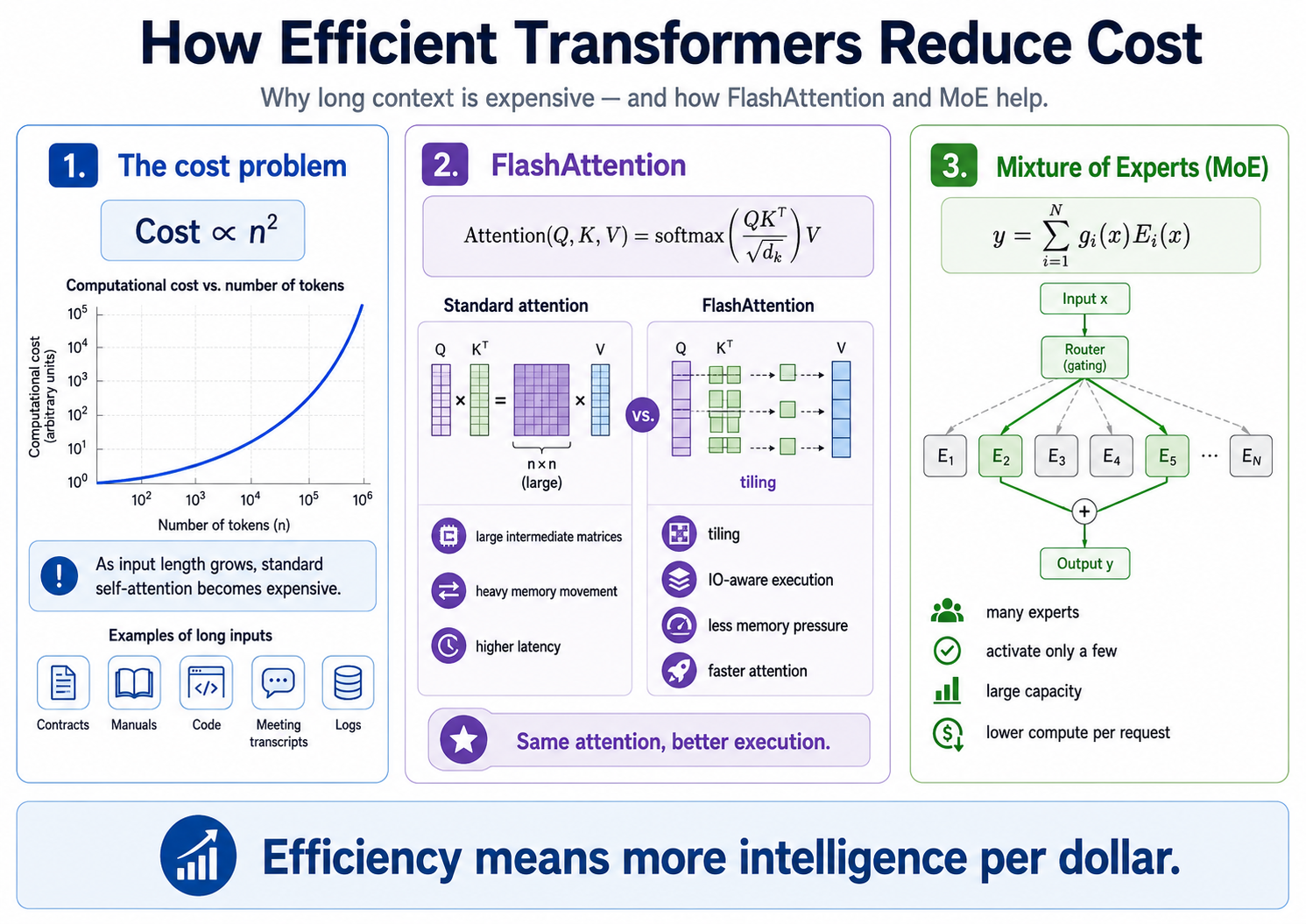
From Bigger to Cheaper: Efficient Transformers and the Economics of AI
Explore how FlashAttention and mixture of experts address Transformer efficiency, and why memory, latency, and deployment costs matter for enterprise AI.
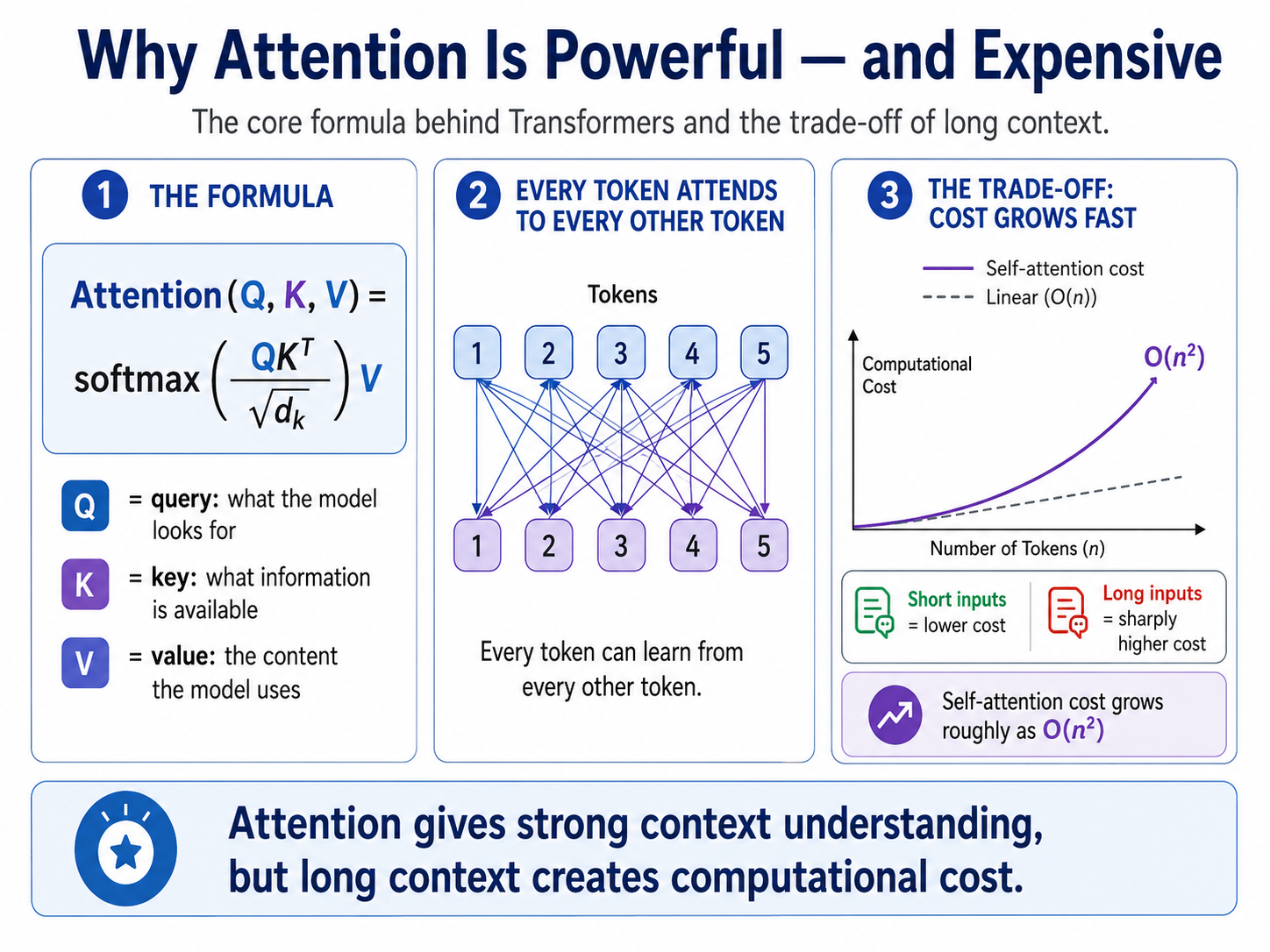
From Scale to Systems: The Future of Transformers Is Not Just Bigger Models
Explore why Transformer-based AI needs more than model scale: efficient inference, RAG, tools, trusted data, and governance connected to real enterprise work.

The Evolution of Transformers: From Language Translation to AI Agents
Trace Transformer evolution from the 2017 attention paper through BERT, generative models, vision, RAG, and AI agents, with implications for enterprise workflows.
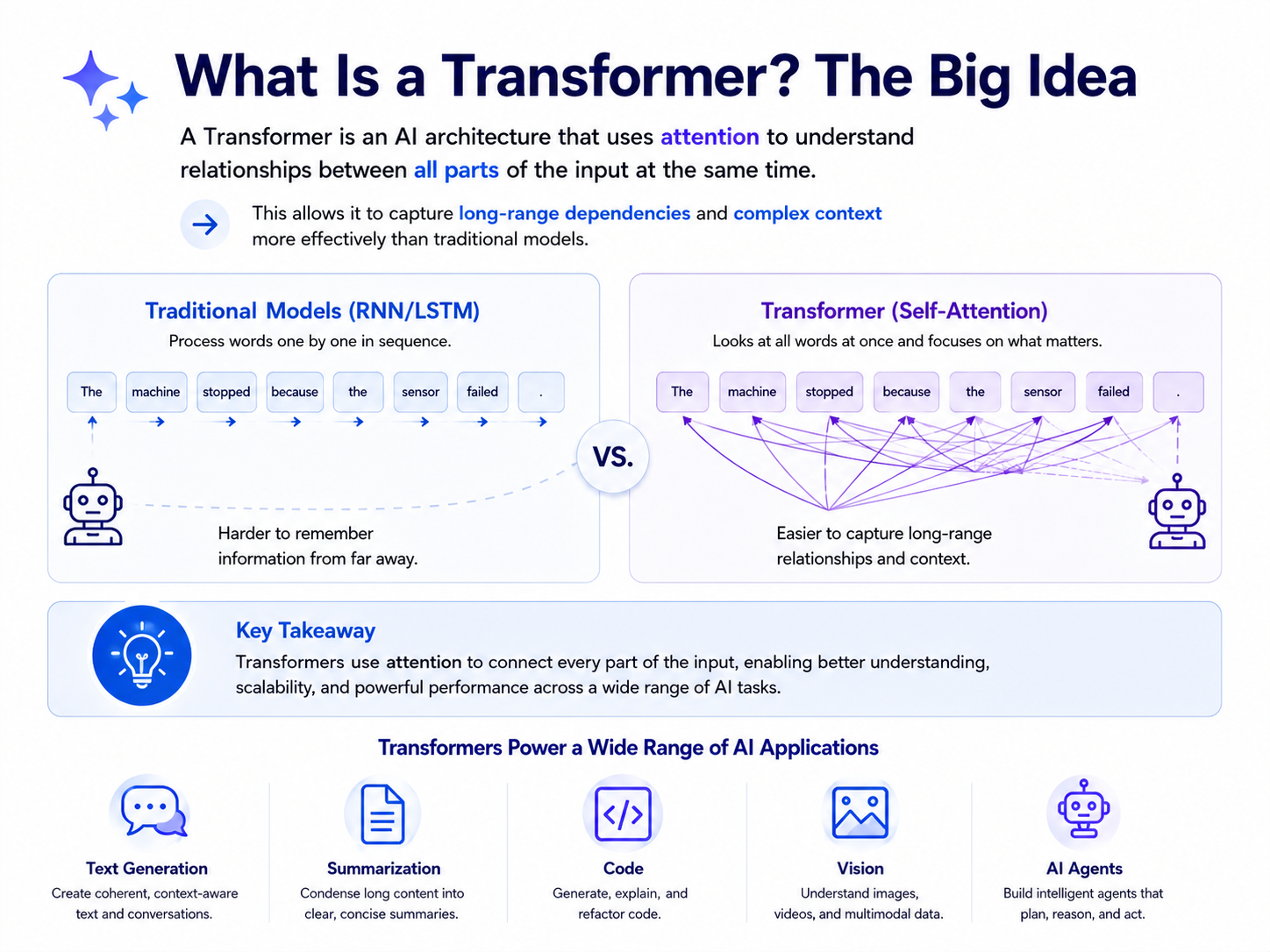
What Is a Transformer? The AI Architecture Behind Modern Generative AI
Understand the Transformer architecture through attention, token relationships, and position information, with examples of generative AI and manufacturing use.
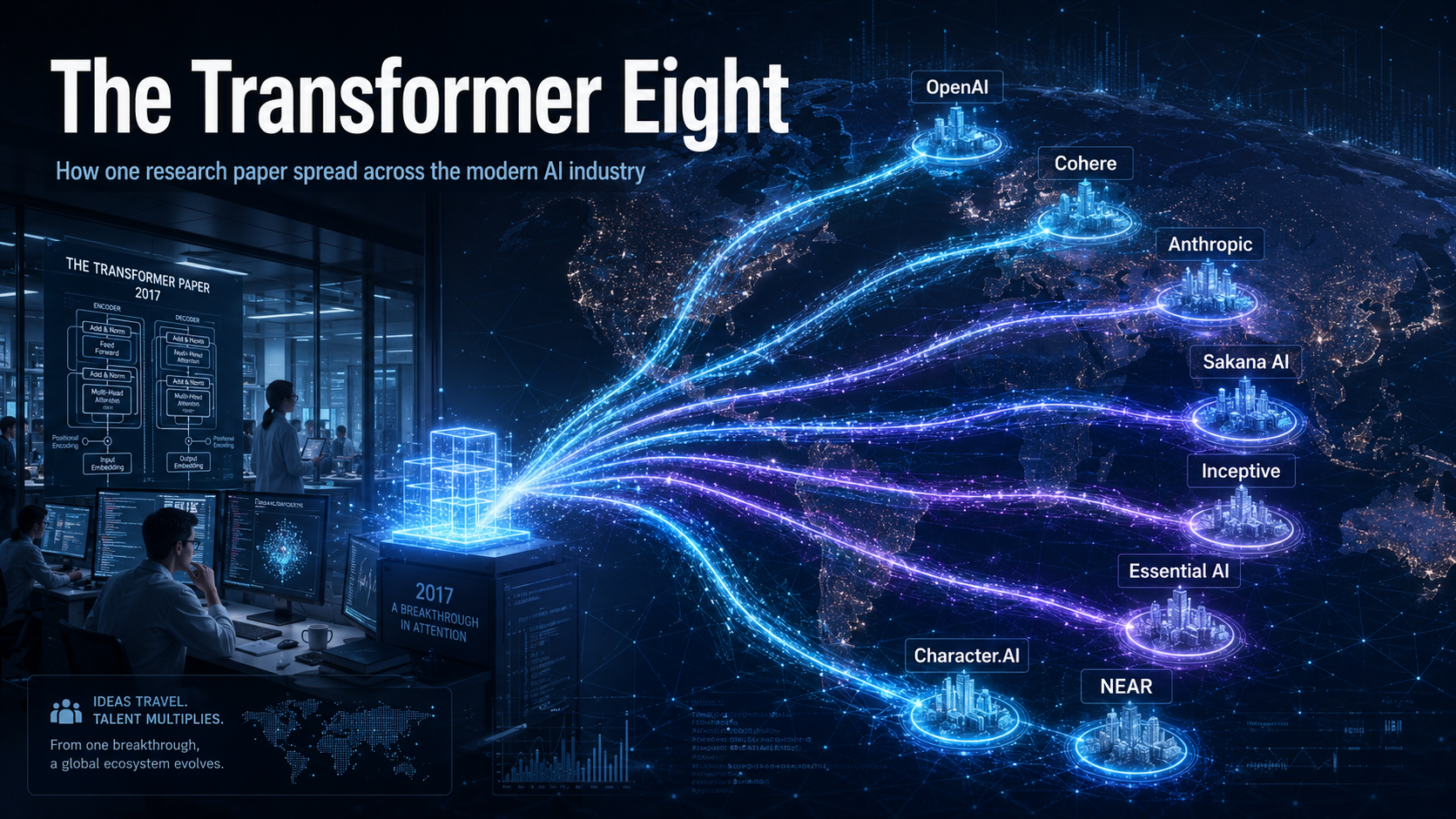
The Transformer Eight: How One Google Paper Created the Modern AI Industry
Meet the eight authors of Attention Is All You Need and explore how the Transformer architecture influenced generative AI, startups, and enterprise…
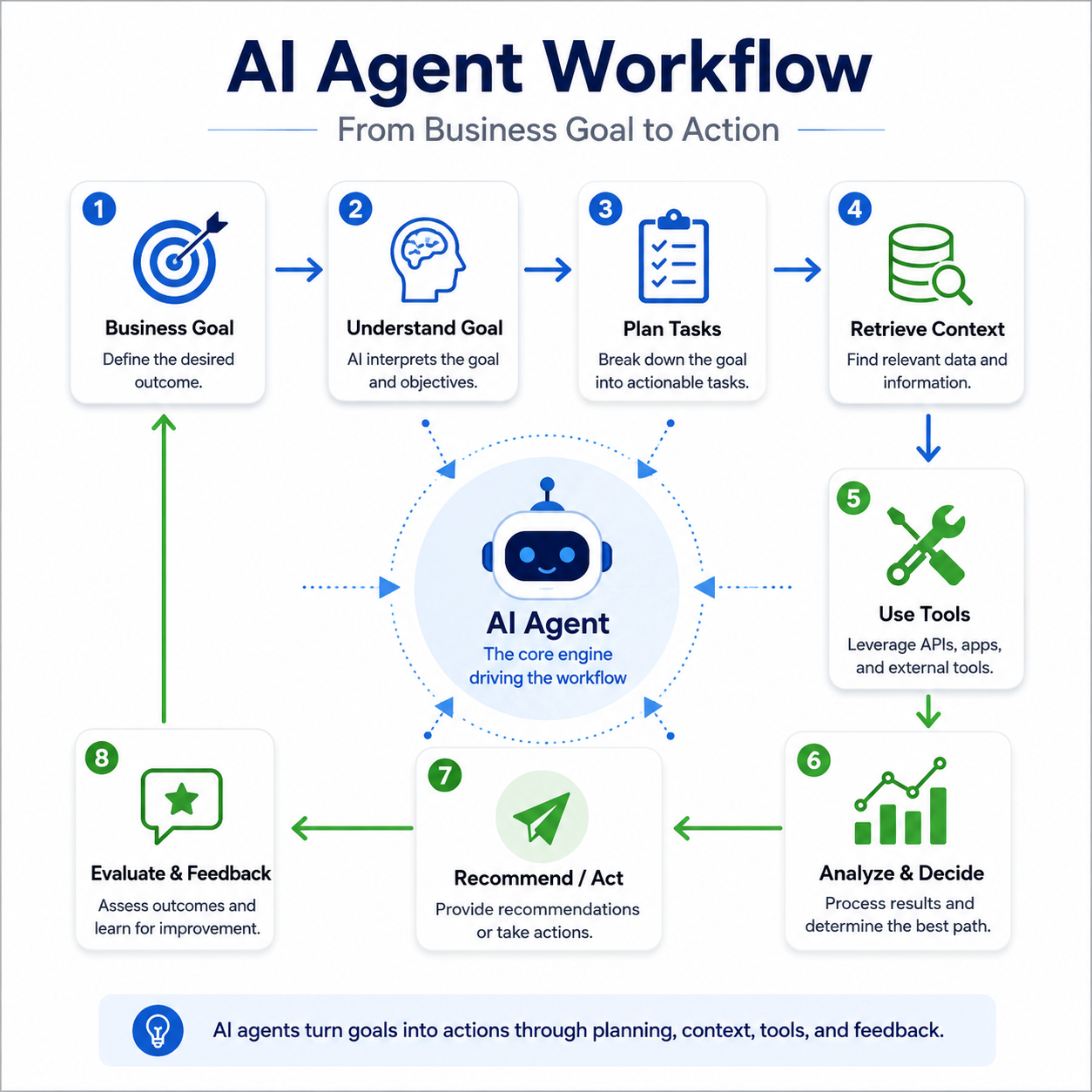
AI Agent Workflow: From Business Goal to Action
Follow six AI agent workflow steps: understand a goal, plan, retrieve context, use tools, recommend or act, and evaluate the result with…
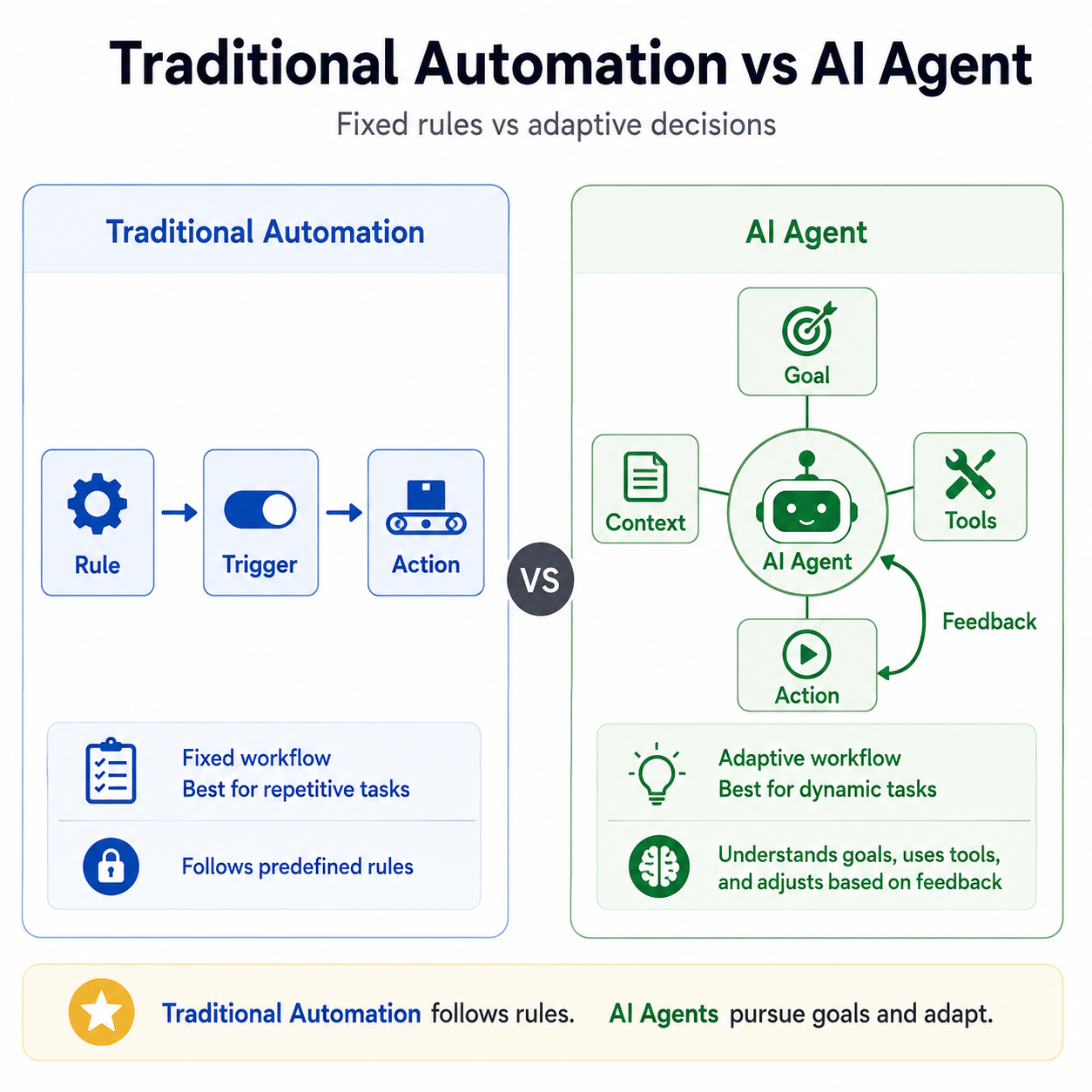
AI Agent vs Traditional Automation: Why Fixed Rules Are Not Enough
Compare rule-based automation with goal-driven AI agents, using a manufacturing alarm example to explain planning, context, tool use, and decision support.